
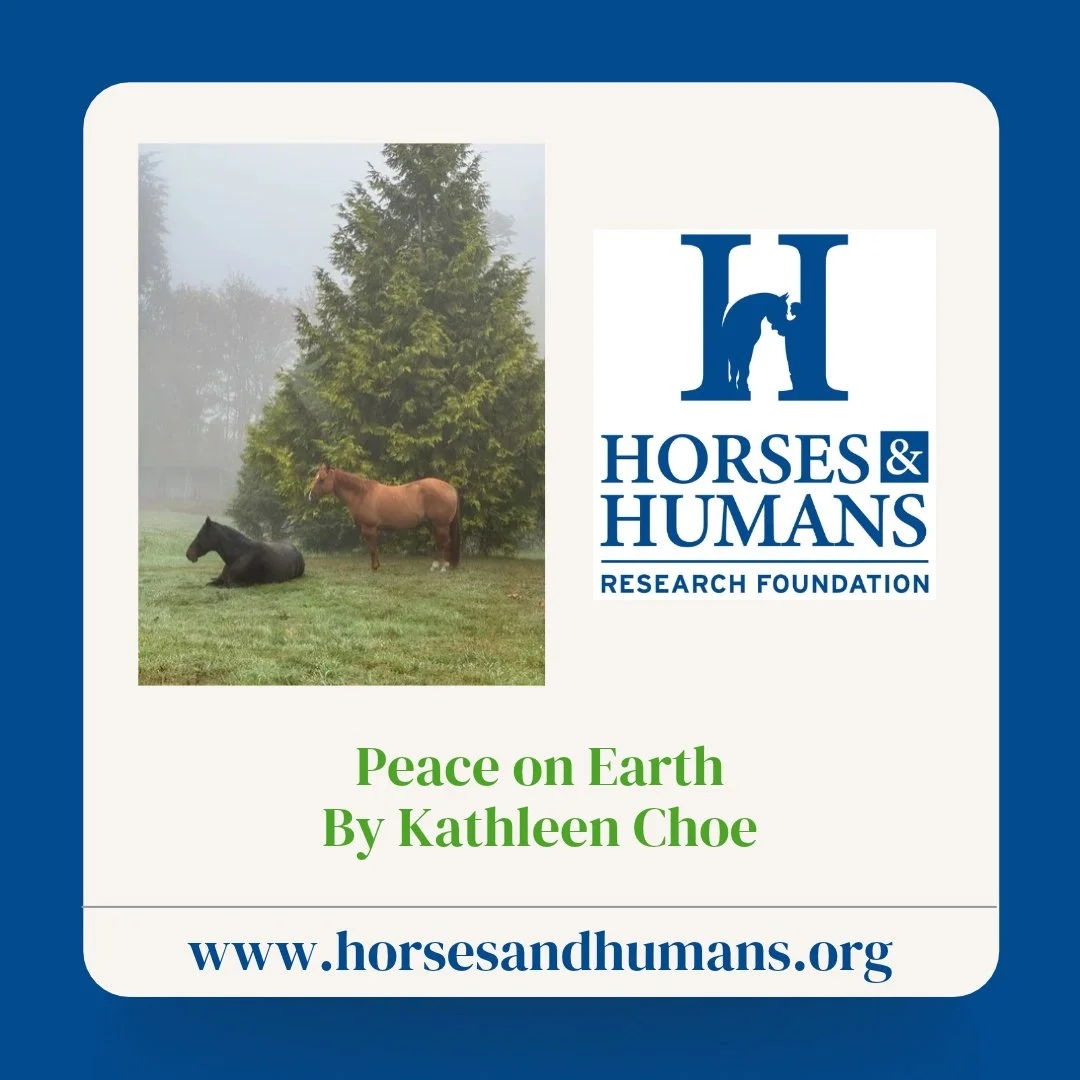
“Peace on earth.” While this phrase is popular on holiday cards that are sent out during this time of the year, it can seem like an elusive concept, wishful thinking in a world filled with conflict and unrest. News headlines continually remind us of the global tensions that seem to be brewing all around. Maintaining our own internal sense of peace becomes more important than ever in this era of constant reminders of external chaos.
The word “peace” comes from the Latin “pax,” which means an agreement to end hostilities. Beyond an absence of war or conflict, however, peace can also be defined as a personal state of mind free from anxiety, stress, fear or emotional turmoil, as a sense of wholeness and well-being. In the world of trauma recovery, we refer to this as “integration.” Healing does not mean constant happiness and calm but rather the integration of painful past experiences into a coherent meaningful narrative that builds our resilience and capacity for joy rather than continuing to trigger and disturb us.
Research clearly demonstrates that interacting with animals can have positive mental, physical and emotional health benefits for people, lowering both physiological as well as perceived markers of anxiety and stress. In other words, being around animals can promote a sense of peace in humans.
Those who have the privilege of being around horses describe the soothing effects as profound.
Fellow horse-lover and family member, Ingrid Varenbrink, reflects:
“Inhaling the scent of my horse grounds me deeply. As I listen to his breath, the quiet munching of hay, my body starts to release the busyness of the day and settles me into a quiet awareness of the present moment.
What can I say, I love the smell of horse manure. It calms me just as much as lavender!”
My four year old granddaughter, Maya, tells me, “When I am with the horses, I feel quiet, and calm, and happy inside!”
HHRF Board Vice-President Debra Thompson reflects, “In the presence of horses I find an inner calmness that settles even the most stressful days. I can be me without judgement. I am accepted.”
Another colleague of mine, Beth Burgmeyer, adds, “Horses bring me back to myself, back to the truest sense of who I am.”
My Equine Assisted Therapy clients report feeling their stress melt away when they spend time with their equine partners. After EAT sessions, I hear statements like, “this is my most honest relationship,” and “being with my horse re-sets my nervous system and brings me to a peaceful state,” and “I feel seen and accepted when I am here with the herd.”
Being around horses can reduce stress for humans. How do we return the favor for our hard-working horses? We know that the sensitive nervous systems of equines pick up on our stress levels.
We do not need to be perfectly regulated or “calm” to be with horses without causing them stress, but rather we need to be congruent and predictable despite whatever emotions we may be carrying to the barn. In other words, finding a measure of emotional regulation and practicing being predictable in our behavior in spite of what we might be feeling and not taking our stress out on our equines (or other people!) is important in creating a safe and healthy environment where both humans and equines can thrive. Remembering that horses are sentient beings who are aware of, sensitive to, and affected by their environment, including the physical and emotional state of others in their presence, and that horses, like people, build resilience when cared for with consideration and empathy ensures that we are promoting peace for them as well as ourselves.
The holidays can be a time of joy but also of increased stress. We can pursue peace by showing generosity and practicing caring about others, including our equine friends, during this holiday season and beyond. In this way, we can promote peace wherever we live.
All of us at HHRF wish you and your horses everything that brings you peace and joy this holiday season
1. Amerine, J.L., Hubbard, G.B. (2016).Using Animal-assisted Therapy to Enrich Psychotherapy. Advances in mind-body medicine, 30(3):11-1, PMID:27541053
2. Mandrá, P.P., Moretti, T.C.D.F., Avezum, L.A., 3.cKuroishi, R.C.S. (2019). Animal assisted therapy: systematic review of literature. Codas, 31(3):320180243
3. Manolăchescu D, Tripon M, Crecan C, Tătaru M, Papuc I. Emotional contagion in human-horse interactions: A pilot study investigating the role of stress and body language in emotional transfer. Open Vet J. 2025 Nov;15(11):6050-6058.