
In September America recognizes an annual holiday referred to as “Labor Day.” While it is traditionally a day off from work, celebrated with end-of-the-summer picnics and barbeques, this federal holiday originated in the Industrial Revolution, when unions organized strikes to protest the harsh, unsafe conditions and long hours workers were exposed to with low wages and few benefits for their sacrifice. Labor Day was signed into law by President Grover Cleveland in 1894 to celebrate and honor the social and economic contributions of the American worker to the nation’s strength and prosperity.
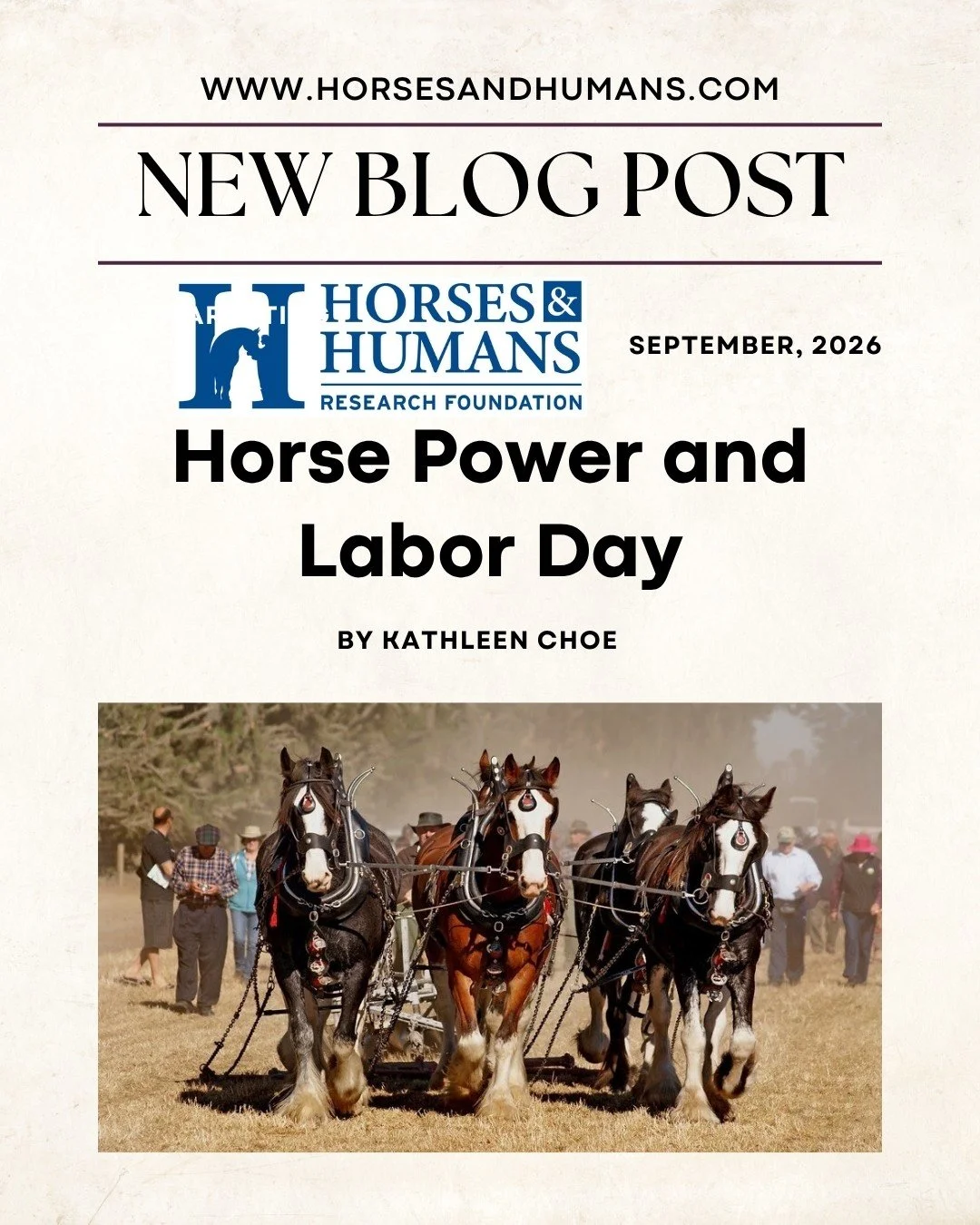
As we remember the two-legged humans who built this country’s economy, we must not forget the four-legged equines who provided the strength and stamina that we lacked to power much of the work being done. Massive, well-muscled breeds like draft horses were specifically bred to pull plows, haul wagons, cultivate fields and harvest and transport crops. “Pit ponies” were used for mining since they were small enough to haul coal through the narrow mine shafts. Freight wagons, fire engines, streetcars and ambulances were all pulled by horses, donkeys and mules, who were literally the “engines” of most heavy labor and transportation. In fact, we still measure how fast an engine or machine can do work in terms of “horsepower.” Scottish inventor James Watt created this unit by watching horses turn mill wheels and measuring their pull. One mechanical horsepower equals the power needed to lift 33,000 pounds by one foot in one minute!
In modern times, most of us don’t depend on actual “horse” power to fuel our labors, but instead look to equines for sport, recreation, therapy and companionship. As the role of horses has changed in both our economy and society, the ways we view and care for them has evolved as well. We now recognize them as sentient beings who require and deserve attention to their living and working conditions, just as humans do. They need access to fresh food and water, freedom of movement, companionship with other equines, as well as rest and play. Most horses have a “job” of some sort, whether on the race track, a ranch or farm, show barn or therapeutic program, and many of them enjoy these jobs, if their needs and welfare are considered and they are given some choices about whether and how to participate.
My quarter horses, Copper and Sterling, greet my therapy clients with curiosity and interest when we come out to the pasture. Since I work with them at liberty they can choose to participate in sessions and also create distance from the work as needed to regulate their own comfort and safety. Even in situations where horses may have fewer choices about participating, they can be given agency over “how” they do so. Asking instead of insisting, giving them time to explore and acclimate to new situations/people/gear/activities without rushing them, and offering appropriate support when they react with anxiety and fear instead of punishing these natural responses as “bad behavior” are all ways to honor the sentience and value of horses as they continue to partner with us in both our labor and recreation.
HHRF continues to fund and promote research into the wonderful ways we can better collaborate with equines to create a healthier, happier world. As you enjoy a lazy morning before heading off to enjoy your holiday celebration, remember to thank not only the humans whose determination and dedication built this nation and ensured safer working environments, but also consider the amazing contributions of our equine partners in making these achievements possible.